The end of the Afrikyan Mansion or how to destroy a national treasure
July 12, 2011
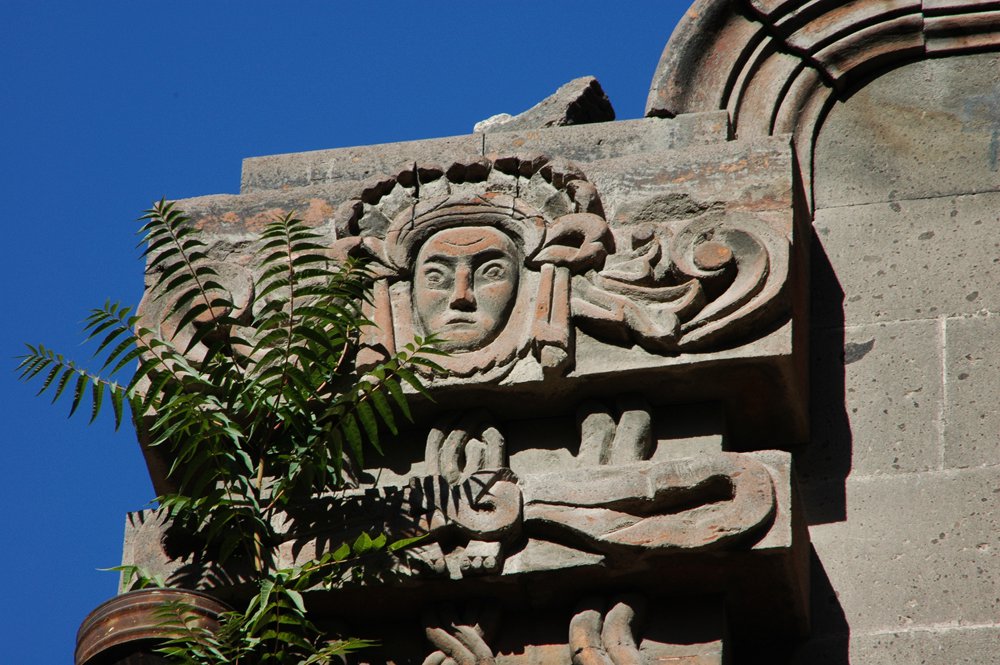
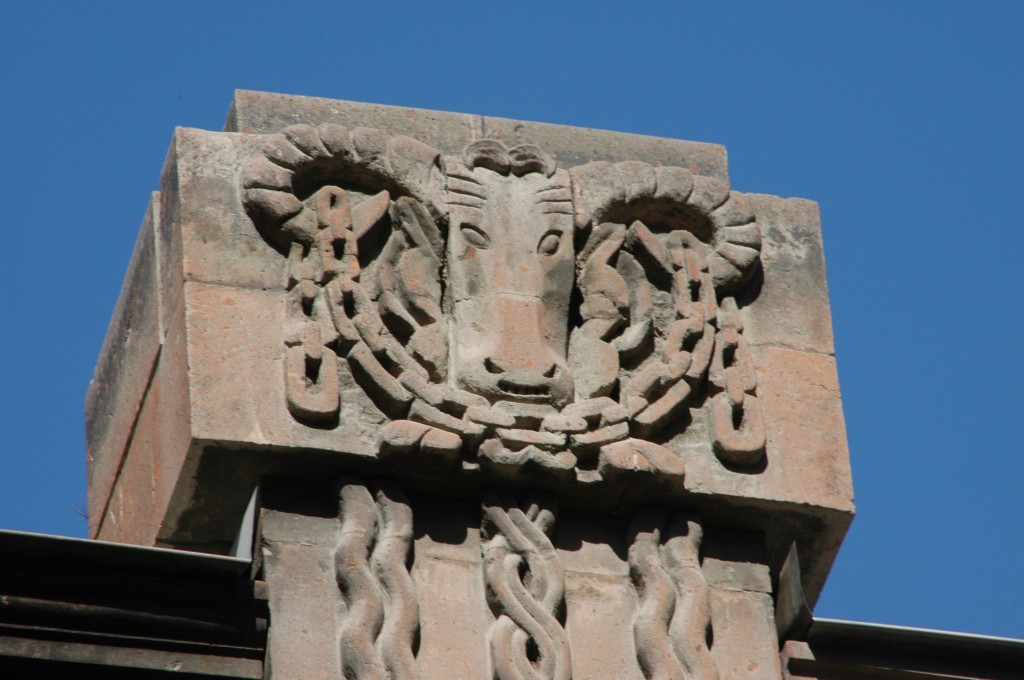
Afrikyan Mansion. Bas relief
Photo by Hayk Bianjian 2006
Galstyan Vigen
In the last few days the social networking site Facebook as well as various online news outlets have been heralding about the destruction of one of the most important secular architectural structures in Yerevan – the mansion of Afrikyan family built in the 1900s on what is now known as Teryan Street. The alarm was raised by activist and photographer Hayk Bianjian on the site of the non-governmental organisation sos.tsirani.am, which regularly reports about numerous problems and abuses that Yerevan’s architectural heritage faces day to day. The house had survived many attempts by city officials and now by real-estate developers to demolish it – attempts that date back to the 1970s.
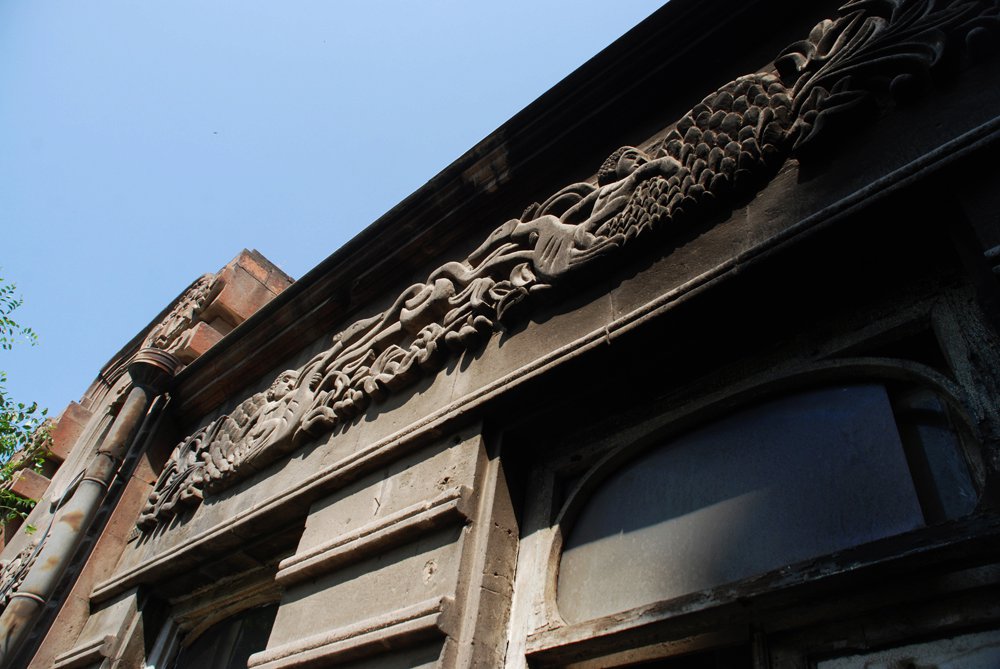
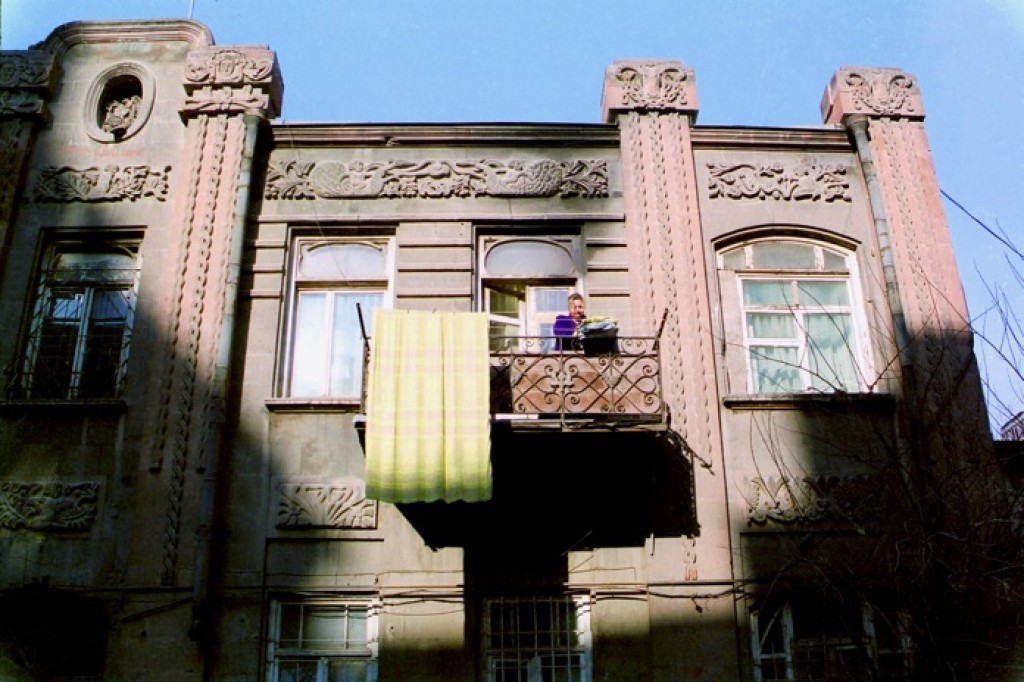
Known for its impressive and unique facade with striking bas-reliefs decorating the entire span of its second floor, the Afrikyan mansion is perhaps one of the most successful examples of Art Nouveau buildings in the entire republic, very few of which have reached our days. Only a few years ago, in 2004 to be precise, the building was included in the register of Historical Monuments of Yerevan (under no. 204) and has a ‘National’ significance, which gives it special privileges according to which its preservation is guaranteed by the state.(1) The architectural historian Marietta Gasparian described this building in her study of pre-Soviet architectural monuments of Yerevan, ‘Old Yerevan’ calling it ‘a wonderful example of painterly modernism’, citing in particular the expressiveness of its facade which contain – uniquely for architecture of Yerevan – figurative bas-reliefs. (2) For many years, the discovery of this quietly hidden architectural gem has surprised and delighted not only visiting guests of the capital but also many of the residents who had been accustomed to believing the old communist propaganda about the ‘mud-brick village that was the Tsarist Erivan’. It was one of the last witnesses of the past century to tell an alternative story of Yerevan’s not so-inglorious past, most of whom were condemned to death and oblivion during the often mindless and relentless reconstruction and modernisation projects that took place in Yerevan in the 1920s, 30s and then with renewed zeal in 1960s, 70s and our days.
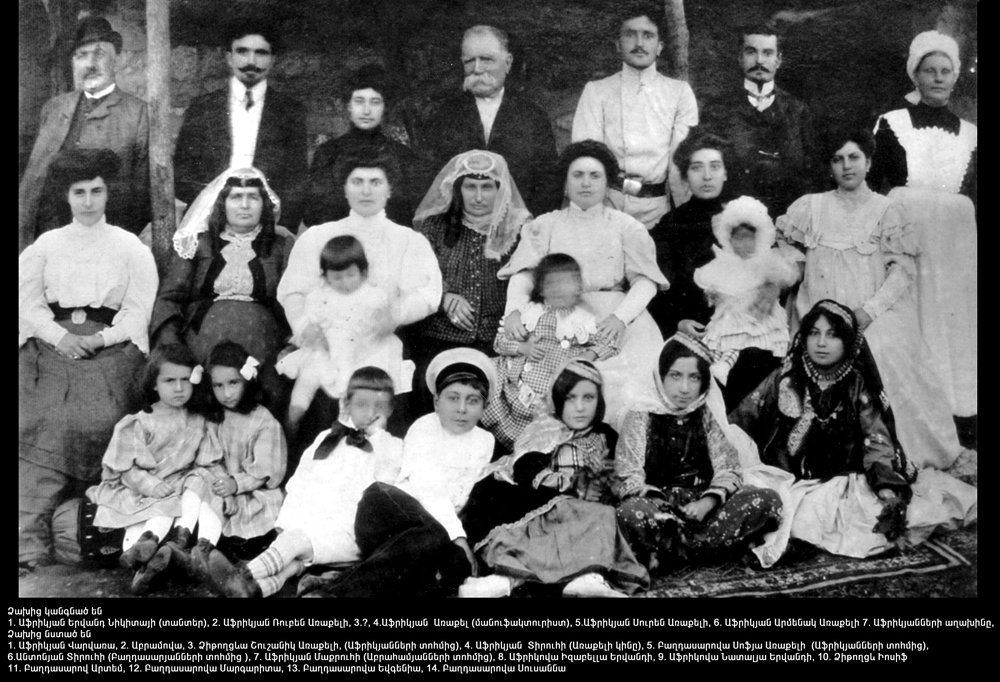
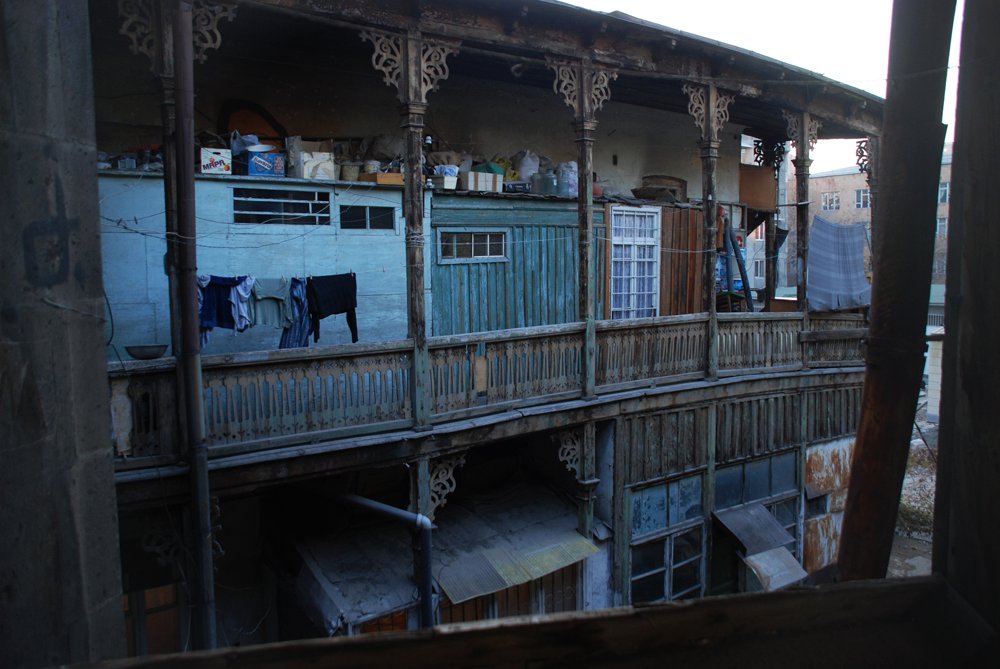
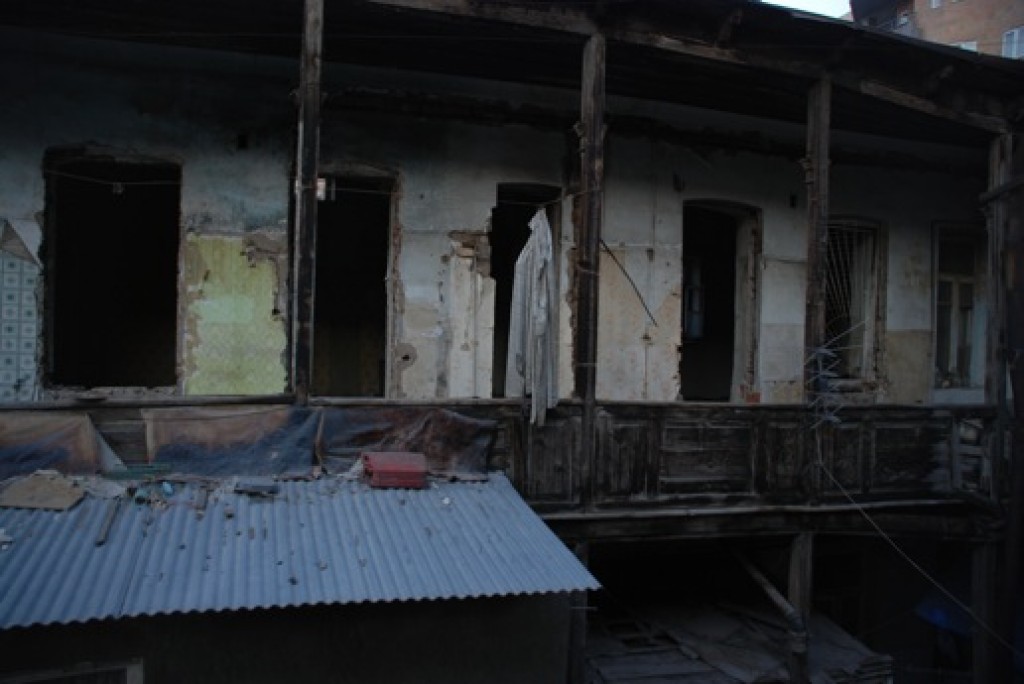
The house was commissioned by brothers Tigran, Yervand, Karapet and Harutyun Afrikyants in the early 1900s when the family opened a large number of businesses and factories in Yerevan, becoming one of the richest and most influential dynasties in the region. It was accordingly sub-divided into four apartments spread across two floors. Behind the facade is an open gallery that looks out onto a common yard. Decorated with a finely designed wooden balustrade and columns, it is one of the most ornate of its kind still to be found in Yerevan. At the back of the house there were a number of other structures of small-industrial character and a well, none of which exist today. Also architecturally interesting is the large basement floor spanning the entire length of the house. None of the original interior elements have been preserved. However, the elegantly curved, handcrafted wooden window-frames, doorways and other small architectural details indicate the extent of the once-lavish design. Also impressive is the metal balustrade running along the stairs, which has been severely damaged over the years. While the name of the architect is unknown, it is most likely that it was designed by Vasiliy Mirzoyan (1863-1925) who was responsible for another Afrikyan mansion nearby. Another likely candidate is Boris Mehrabian (1870-19??) a number of whose known buildings in Yerevan include typical elements of Art Nouveau.
The history of the house is as rich as is its decor. According to the local mythology and some of the residents, the house, after being nationalised by the newly-formed Soviet government was turned into KGB quarters and its large basement served as a dungeon. One can still see graffiti left by prisoners along its walls. At some point it also became a notorious bordello until it was settled by ten or so families who crammed into the tightly subdivided rooms. Nobody knows when the house was last renovated and by the early 2000s its sad state was obvious for everyone to see and despite its striking architectural qualities the building was not included on the register of historic monuments until recently.
Despite outliving the sad fate of its neighbours – historically interesting houses from the 19th century, all of which were demolished in the past ten years – the Afrikyan house seems destined to finally come down regardless of its status as a monument of national importance. The block of Teryan/Pushkin streets on which the house is positioned, has been overgrown by 10-12 storey bleak apartment blocks that have completely destroyed the historical environment and a new block, similar to the one opposite the mansion now is meant to go up in its place.
When we turned to the city administration (via the mere’s official Facebook page) to find out whether any measures are being taken by the city council to preserve the building, the mere’s spokesperson Shushan Sardaryan confirmed that the “developer was given instructions to number and deconstruct the building with the aim of reconstructing it somewhere else”. (3) Just where this ‘somewhere else’ is going to be nobody knows. The fact remains that the house is currently being quickly demolished and the facade has not been numbered and there are no known plans for its reconstruction elsewhere.
The history of the real-estate development that is to take place on the site is tangled and murky. Initially permission was granted to ‘Dvin Holding Ltd’ to develop the site and since 2006 this company has been involved in court cases with the residents who were offered ridiculously low amounts of money for their property. This company had gone bankrupt and the rights passed to a different organisation called ‘Millennium Construction’, which according to some sources has ties with the owners of ‘Dvin Holding Ltd’. If in the best case, the facade is preserved, the likelihood that it will be inserted into the body of the new building – just as we have seen recently in a number of newly constructed high rise apartment blocks on Pushkin and Arami streets – is very high. In this case, the original grandeur, charm and value of the building will be completely lost as its architectural distinction lay in its clever mixture of local and European traditions which can only be evident when seeing the entirety of the complex.
The demolition of this extraordinary structure without even a pretence at its preservation (as was done with dozens of other monuments during the construction of Norther Avenue and other large development project nearby – almost none of which have been reconstructed since their deconstruction in the last decade) is not only a blatant violation of the law, but a severe blow to any hope for the future of all the historic monuments in the country. With the destruction (since anything but a full preservation and reconstruction of the building will be tantamount to a destruction) of the Afrikyan mansion a tragic precedent will be set for the few still existing remnants of 19th century secular architecture in Yerevan.
Currently a group of Facebook activists (who have opened a page called ‘SOS Save the Afrikyan Mansion‘) is trying to raise awareness within the public and the media, but so far the silence from either the Ministry of Culture or the Committee of Historic Monuments is deafening since no official statement has been released to the media.
(1): This list can be found at the following web address – http://pkz.am/n-1616-%D5%B6-07-10-2004. The Afrikyan mansion is listed under monuments liable for movement and reconstruction.
(2): http://www.iatp.am/old_yerevan/TEXT/130.htm
(3): Comment posted on the 11th of July here: http://www.facebook.com/?ref=logo#!/Karen.Karapetyan/posts/147333378675597?cmntid=147488045326797