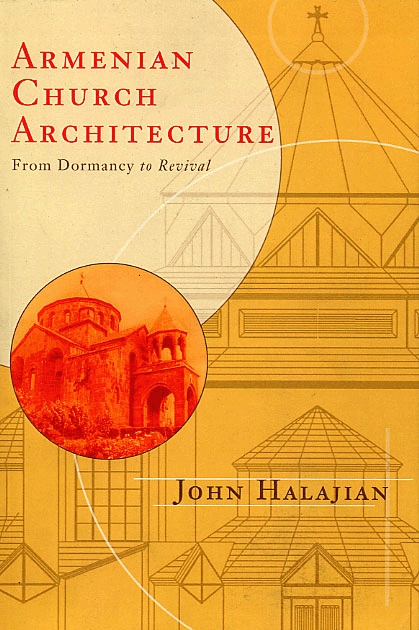
Armenian church architecture: from dormancy to revival
Armenian church architecture from dormancy to revival
Cover of the book
Հայկական եկեղեցիների ճարտարապետությունը` նիրհից դեպի վերածնունդ
Most books about Armenian Church architecture are written by historians and archeologists. In this book, the author, John Halajian, approaches the subject as an engineer-architect. His point of departure is the past, but his main focus is the future. Halajian explores new possibilities of this venerable architecture in a changing socio-technological environment as a sort of archeology in reverse. The book has nearly 300 pages of text and original drawings of 26 individual churches designed during a period of over 40 years. The purpose for Armenian Church Architecture is to explore the future possibilities for innovation and growth of a once glorious Armenian art form that has lain dormant for nearly a millennium. The author does not burden the reader with technical jargon; instead he transforms our understanding of church architecture in easy to understand language. Not content to remain in the historical mode, Halajian presents fresh, insightful design innovations for inspiration. These designs range in size from a small parish church to a cathedral and include floor and roof plans, seating, structural framing, elevational views, and even cultural symbolism. The final chapter ?Peripheral Reflections? is a glimpse into Armenian national character and culture. Rich in history, yet, aware of contemporary tastes and debate, Armenian Church Architecture is thoroughly engaging in both dialogue and illustration. The book would be immensely helpful to anyone planning to build a church. This study is an important contribution to the field and will be fascinating reading for anyone interested in the creation of sacred places set aside for worship.
About John Halajian
Born in Damascus, Syria on January 1, 1926, where he spent his early years. He came to New York and married, and was blessed with four daughters. Mr. Halajian suffered greatly in his later life due to a quadriplegic condition caused by a surgery gone awry, He wanted to provide an in depth analysis of Armenian Church architecture and provide a roadmap to future Armenian Church designs. His primary challenge was to learn modern computer-aided drafting tools. With the use of a single finger, his thumb, which still had some motion in it, he produced and published a masterpiece, Armenian Church Architecture: From Dormancy to Revival. Immediately following, with great tenacity, he wrote about his second passion, Moon Stories.