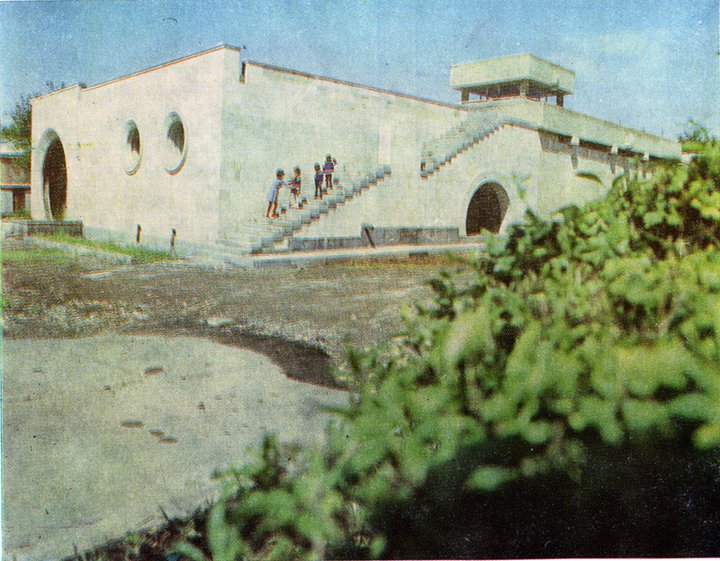
Codex of soviet time secular buildings in Armenian cities
December 26, 2011
Եղեգնաձոր, երկրագիտական թանգարան
A) This project is aimed at creating the most comprehensive documentary database of historic, pre-Soviet and Soviet
secular architecture within Armenia’s urban environments as well as discovering exceptionally valuable examples of
such architecture that are in urgent need of restoration. Secular architecture, despite forming an exceptionally
important part of Armenia’s cultural, artistic heritage as well as being a vivid historical document has remained
largely unknown – ignored by public at large and even by most specialists working in the field of Armenian
architecture.
B) The crust of the project is the preservation of the historic and artistic legacy represented by these fast disappearing
monuments and environments through detailed documentation, evaluation and analysis. The realization of this project
is absolutely essential for the commencement of the second stage of our activities, which is the restoration of
individual buildings and sites (this stage is not covered in this grant application). We will thus bring to attention a
legacy that has been ignored by the state throughout decades and is constantly, unrelentingly under the danger of
complete annihilation. Thus the documentation process becomes not only the first step towards the conservation of
these monuments, sadly, it is often the only means of preserving them.
C) The creation of the extensive image and information archive, which will be formed as a result of our investigations
is going to become an essential tool for specialists of Armenian architecture and will be accessible to anyone with a
computer and internet connection. It will lay the basis in architectural scholarship for studies of a new historical
period in Armenian urban architecture, create a platform for restoration projects and also serve as an effective tool for
ReArk’s team to monitor the chaotic real-estate development projects that have sprung-up all over the country:
Examples of secular architectural heritage under threat
SITE DESCRIPTIONS:
YEREVAN: Armenia’s capital city has been the nexus of architectural development in the country for the past two hundred years. Throughout the many stages of its turbulent history the city has lost and gained numerous exceptionally interesting architectural gems. This process continues today with ALL heritage-listed sites in the city currently being under some form of danger from real-estate developers and ignorant attitude by the government bodies. Particularly at risk are: all the remaining 18-19th century houses and dwellings throughout the city, archaeological sites in the vicinity of the city centre, early examples of Soviet architecture from the 1920s and 1930s; important examples of Armenian modernist architecture from 1960s. (NB: ReArk has already conducted thorough investigation of numerous sites in Yerevan and it will not focus on the capital city within the framework of this project).
GYUMRI: The second largest city in the country has the best preserved and most complete layer of historic architecture in Armenia despite the devastating earthquake of 1988. Currently the fate of this precious and utterly unique architectural reserve is in a precarious state due to neglect and requires urgent attention.
VANADZOR: An enormous industrial center in the north of Armenia and the third largest city. Contains numerous important examples of industrial architecture by some of the key Armenian architects.
ALAVERDY: An industrial site since the late 18th century, Alaverdy’s urban architecture has been completely ignored and is little known. The city’s patrimony needs a total re-evaluation in light of renewed understanding and respect towards early Soviet architecture.
DILIJAN: Dilijan is a resort town with a type of 19th century vernacular architecture that is unique to the region. It also contains a large number of important early Soviet structures, such as resorts, private residencies, parks designed by the best architects of the time.
ARMAVIR: Somewhat derided for being situated so close to the Nuclear Power Plant, Armavir contains important and practically unknown examples of 19th century colonial architecture as well as a number of projects designed by Armenia’s best-known modern architect Alexander Tamanian.
GORIS: A city with long tradition of exceptional quality vernacular architecture – the remains of which are at great risk due to neglect.
MEGHRI: The southernmost city in Armenia, Meghri has one of the best preserved 18th century historic urban environments that is not protected in any way and is at risk due to ‘renovations’ being carried out by the owners of the houses.
TALIN: Talin is a small city close to Gyumri, which has one of the richest deposits of ecclesiastical architecture in the entire country. It also has very rare specimens of 18th century vernacular architecture which require urgent and detailed study and conservation.
SISIAN: Contains interesting examples of colonial and Soviet architecture.
JERMUK: As Armenia’s primary health resort Jermuk has received much attention from our best architects from 1950s-1980s. It also contains some of the most impressive examples of engineering to be found from that period. The city is currently being developed again and much of its original architecture is at risk from being irrevocably altered in some way.
EJMIATSIN: The religious center of Armenia had already lost most of its original fund of vernacular architecture by 1970s. However, important examples remain scattered throughout the city and require immediate documentation due to the complete lawlessness that governs the city’s real-estate development policies.
KAJARAN: Contains extremely important group of industrial structures and administrative buildings built between 1920s and 1960s.
ASHTARAK & OSHAKAN: One of the oldest continuously settled areas in the entire Caucases, Ashtarak has a remarkably well preserved fund of ecclesiastical, secular and vernacular architecture that has no protection status from the government and is viable to be destroyed due to the city’s popularity as a summer residence for Yerevan’s more affluent contingent. Its sister township of Oshakan is notable for some beautiful 19th century mansions as well as various structures dating back to 5th century AD.
KAPAN: Highly interesting urban environment created on a particularly challenging and volatile geographic site. Many of the high-rise apartments are important examples of Soviet-Armenian engineering during the 1960s and 70s.
Other cities with no documentary archive relating to their architectural patrimony: Akhtala, Ararat, Artashat, Artik, Berd, Eghegnadzor, Gavar, Hrazdan, Ijevan, Martuni, Noyemberyan, Sevan, Shamlugh, Stepanavan, Tumanian, Vayk, Vedi.
If you are interested in sponsoring this project and donating for its accomplishment, please, write to us info@reark.org